Rachel Shih
Lab Technician
Stem cells Flow cytometry Molecular biology
Human pluripotent stem cells Developmental biology Transplant immunology
McGill University · RI-MUHC · Montréal
We study how human tissues form and how the immune system responds to them, to advance personalized care for people with kidney disease and diabetes.
Explore our researchTransplantation can transform lives. Our goal is to help that promise go further.
Our research brings together developmental biology, immunology and stem cell bioengineering. By investigating human kidney and pancreas development alongside transplant rejection, we work toward diagnostics and cell therapies that could reduce the burden of lifelong immunosuppression.
We use stem cell–derived organoids to dissect the molecular mechanisms of allorejection: the immune response against tissue from another individual.
Focus: human organoid models of rejection
We are developing a platform using patient-derived induced pluripotent stem cells to model allorejection in the context of an individual’s biology.
Focus: patient-specific iPSC models
We investigate how human pluripotent stem cells acquire organ identities, with a focus on pancreas, kidney and thymic progenitors.
Applications: personalized models and cell therapy
Clinician-scientist
Kidney transplantation
Principal Investigator
Assistant Professor, Division of Nephrology
McGill University
Junior Scientist, RI-MUHC
Metabolic Disorders and Complications Program
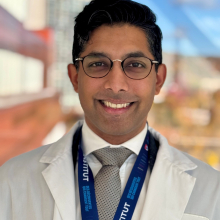
Paraish is a nephrologist and clinician-scientist whose work connects stem cell biology with the challenges of kidney transplantation.
He completed his medical degree and internal medicine residency at McGill, followed by nephrology and solid organ transplantation fellowships at the University of Toronto. His doctoral research explored pancreatic islet development and interactions with the immune system.
During postdoctoral training at the McEwen Stem Cell Institute, he investigated reprogramming urinary cells into pluripotent stem cells and their potential for kidney tissue regeneration.
Lab Technician
Stem cells Flow cytometry Molecular biology
M.Sc. Student
McGill Graduate Excellence Award
Stem cells Flow cytometry Kidney development and differentiation
Medical Undergraduate Research Student
McGill FHMS Summer Research Bursary Award
T cells Flow cytometry Allorejection HLA biology
M.Sc. Student
T cells Gene editing Endothelial differentiation Allorejection
Ph.D. Student
Thymic epithelial cells Bioengineering Cell therapies Encapsulation
Undergraduate Honours Research Student
Thymic epithelial cells Functional maturation Reporter cell lines
Undergraduate Summer Student
Molecular biology Modified RNA
Undergraduate Summer Student
Stem Cell Network Summer Studentship Award
Thymic epithelial cells 3D organoid culture
Medical Undergraduate Research Student
McGill FHMS Summer Research Bursary Award
Intermediate mesoderm differentiation Neuroectoderm and retinal differentiation Wnt signaling
To discuss research collaborations, training opportunities or ways to support the lab, please contact Dr. Misra.
paraish.misra@mcgill.ca